
Understanding Your Body Budget
Have you ever snapped at someone you love over something trivial, only to realize later that you were just exhausted and hungry? Or felt completely overwhelmed by a simple task that would normally be easy? You might have been experiencing what neuroscientist Lisa Feldman Barrett calls a depleted "body budget."
What Is the Body Budget?
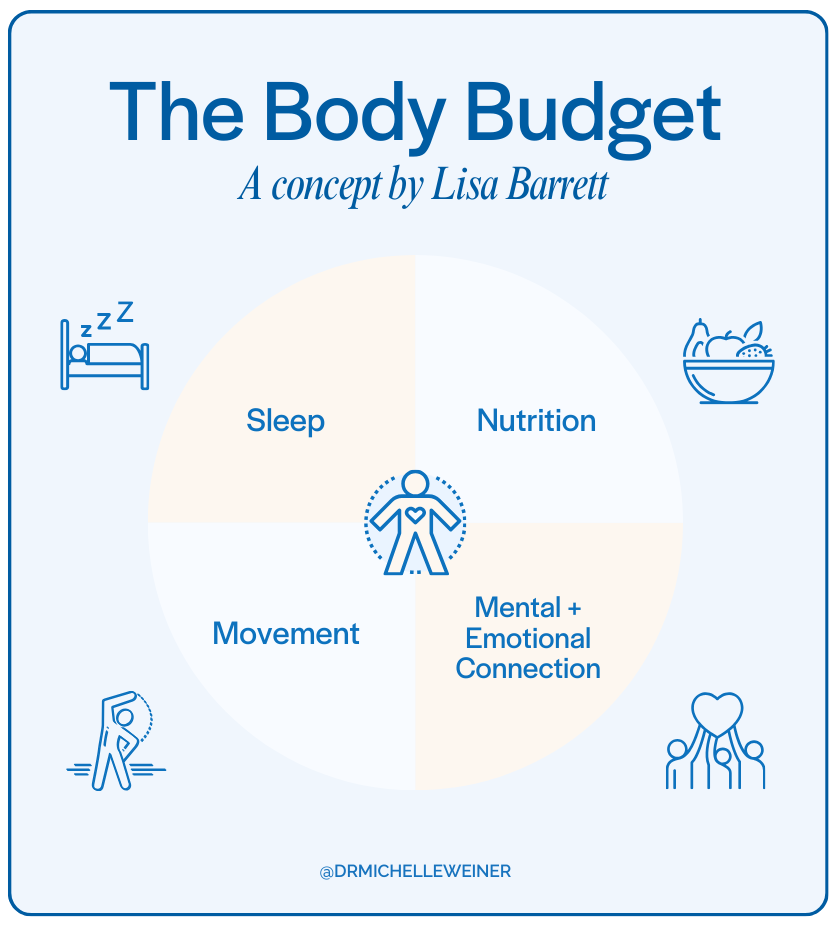
Think of your body budget like a bank account, but instead of tracking dollars, it tracks the essential resources your body needs to function: physical sustenance (food and water), sleep, movement, and mental/emotional sustenance. Every action that spends resources—moving, working, thinking, worrying—is like a withdrawal from your account. Actions that replenish your resources, such as eating and sleeping, and connecting with people you love, are like deposits.
The scientific term for this process is allostasis, but Barrett's body budget metaphor makes it much easier to understand what's really happening in our bodies and brains every single day. Your brain isn't primarily designed for thinking, as we often assume. Its most fundamental job is managing this budget to keep you alive and functioning.
Your brain is constantly predicting what your body will need and preparing for those demands based on your past experiences. This forecasting system explains why you might feel anxious before a big presentation even when nothing has gone wrong yet—your brain is spending resources in advance, based on similar past experiences.
How Your Mood Reveals Your Budget Balance
Your mood is your brain's way of reporting on your body budget status. When your budget is balanced, you feel good—energized, focused, emotionally flexible. When it's running low, you feel irritable, foggy, or withdrawn.
Our awareness of sensory signals—like heart rate, breathing, and digestion—sends information about our body's energetic condition back to the brain. These signals inform your body budget, the resources your brain uses to regulate energy and overall well-being. We experience this as mood, that general sense of feeling good or bad that colors our entire day.
The classic example is being "hangry"—feeling irritable or bad-tempered simply because you're hungry. Your body budget is depleted, and your brain is signaling that it needs a deposit, stat. The frustration you feel isn't really about your circumstances; it's a reflection of your metabolic state.
When Your Brain Goes Bankrupt
When your body budget runs low—due to chronic stress, depression, lack of sleep, or ongoing overwhelm—your brain essentially goes into save mode. Just like you might cut back on expenses during a financial crisis, your brain starts cutting back on functions that aren't immediately necessary for survival.
This results in reduced capacity for learning (which is metabolically expensive) and limited emotional flexibility. When your body budget is in the red, you feel overwhelmed, anxious, and exhausted. You become physically vulnerable to infections and falling sick.
When this deficit continues for too long, you end up with what we might call a "bankrupt brain." A depleted budget also creates resistance to learning and makes you prone to cognitive bias. Absorbing new information is costly for the brain, so sticking with what you already know is cheaper and more attractive when resources are running low. This is why it's so hard to think clearly or learn new things when you're sick, stressed, or exhausted.
The Modern Body Budget Crisis
Unfortunately, much of modern life seems designed to drain our body budgets. Processed foods with high sugar and unhealthy fats, jobs and schools that require early wake times and late bedtimes, and the expectation of constant availability through phones all throw off our body budgets. If we’re not paying attention to our mental and phsyical “spending,” our brains end up working overtime just to keep up.
Replenishing Your Bankrupt Brain
The good news: You can actively manage and restore your body budget. Here are practical ways to make regular deposits into your account:
Prioritize the Big Four: Healthy eating, sufficient sleep, regular movement, and loving connection/spiritual inputs (this can be spending time with loved ones, a pet, or in spiritual studies and practices – or all the above) are non-negotiable. These are your largest deposits, and they reduce the strain on your brain's energy management system.
Take mindful breathing breaks: Give yourself just five minutes to breathe deeply. This simple act signals safety to your nervous system and helps rebalance your budget.
Tune into your body's signals: Notice what your body is telling you. That tension in your shoulders, that gnawing in your stomach, that heavy fatigue—these are budget alerts, not character flaws.
Stay hydrated and nourished: Make sure you're drinking enough water and eating fresh, nutritious foods throughout the day. Don't wait until you're desperately hungry or thirsty.
Journal for clarity: Spend ten minutes writing down your thoughts. This helps process experiences and emotions, which is less taxing than keeping everything bottled up.
Connect with loved ones: When you interact with friends, family, and other loved ones, you unconsciously synchronize your breathing and heartbeats, which helps regulate your body budget. Physical touch, like hugs, provides powerful deposits.
Practice strategic "no": Take inventory of your regular activities and commitments. What can you say no to? Protecting your budget sometimes means setting boundaries.
Change your environment: Spend less time in noisy, crowded spaces and more time in places with greenery and natural light. Your physical surroundings affect your body budget significantly.
The body budget framework offers a compassionate way to understand why we feel the way we feel. That difficult mood might not signal a psychological defect—it might just mean you need sleep, food, or connection. By recognizing the signs of a depleted budget and taking action to replenish it, you can build resilience, improve your emotional well-being, and show up as your best self.
Your brain is doing its best to manage an incredibly complex system. The least you can do is help it out with some regular deposits.